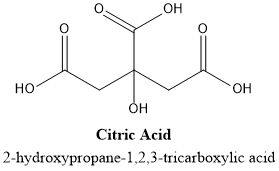
Citric Acid |
Like all living organisms, citric acid plays an important role as a key intermediate compound in the plant's metabolic life. In green coffee, citric acid along with malic and quinic acid constitute a significant portion of coffee's total acid content and in the development of perceived acidity. During roasting, citric acid reaches a maximum at light to medium roasts, then quickly diminishes as roasting levels progress. A typical medium roast will lose about 50% of its initial citric acid concentration1 and diminishes further as roasting progresses - see graph below.
Table 1 below summarizes commonly organic acids found in coffee before and after roasting.
With an intensely sour/sharp charateristic, excessive citric acid in coffee is detrimental to quality. In the beverage industry, commonly uses citric acid as a food acidulant imparting sharp sour and tart notes. However, when this occurs in coffee it is typically an indicator of poor post harvest separation. If care is not taken to separate unripe green beans from ripened red ones, the batch can severely be affected. This is beacause green unripe beans contain underdeveloped sugar which do not fully develop during roasting - commonly appearing as lighter color beans (quakers).
However, as maturation continues citric acid levels decrease with a paralleled increase in sugar production. Generally, Kenya coffee tend to have lower levels of citric acid than those of Central America, suggesting a less advanced form of plant metabolism2.
|
||||||||||||||||||||||||||||||||||||||||||